
Share this post
The global market for vertical farming is set to reach $19.86 billion in 2026 as more growers are turning to this type of agriculture because of the declining size of arable land. Additionally, vertical farming saves water compared to traditional farming methods.
So, how much water does a vertical farm really save, and what are the challenges that growers face with this type of setup? In our guide below, we’ve explained what vertical farming is, how it works, how much water it uses, and some of the benefits and downsides of growing crops this way.
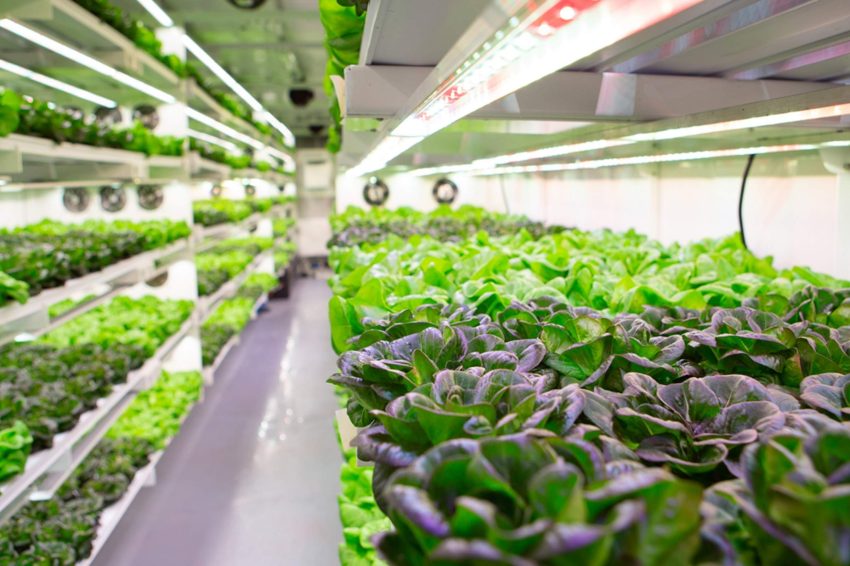
(Featured image credit: https://agriculture.auburn.edu/feature/foodu-expands-vertical-farming-operation/)
What is Vertical Farming?
Vertical farming is an agricultural technique where growers plant crops in stacked layers or vertical towers. These vertical farming systems are typically grown indoors using hydroponics.
Furthermore, you can set up a vertical farm in repurposed buildings, warehouses, and greenhouses. Growing crops vertically indoors is one of the best ways to cultivate vegetables and herbs all year round because there’s less risk of environmental impact, like soil erosion and pollution.
How Vertical Farming Works
There’s more to growing crops in a vertical setup, especially when you’re cultivating vegetables, fruits, and herbs indoors and with hydroponics. This agricultural technique requires proper irrigation, artificial lighting, and controlled temperatures and humidity.
Crops are supported in channels or trays and fed nutrient-rich solutions. Water is supplied directly to the roots of these crops, and coconut fibers, clay, or rock wool replace substrates. Oxygen also needs to be supplied to crops, and this can be done using pumps or through the Nutrient Film Technique.
How Water Works in A Vertical Farm Setup
As mentioned before, one of the advantages of vertical farming is that it’s said to use less water compared to traditional farming. But exactly how is water delivered to crops when they’re grown on stacked layers or in towers? There are various methods which are used depending on:
- Where you place your farm. Indoor farms, urban warehouses, and greenhouse-based vertical farms all have different space constraints, water access, and climate control requirements, which influence whether systems like hydroponics, aeroponics, or drip irrigation are most suitable.
- Which crops are you growing. Leafy greens, herbs, and fruiting crops all have different root structures and water needs, affecting flow rates, irrigation frequency, and system design.
- What type of setup you have (hydroponics, aeroponics, and aquaponics).
No matter what system you choose, your crops need a constant flow of water and nutrients. You also need to factor in water and energy efficiency, especially if you live in areas where there are droughts. Precision watering and drip irrigation are two of the most common methods used for vertical farms.
These watering methods provide precise amounts of hydration and nutrients to crop roots to minimize waste and ensure the crops get the exact amount of water they need. A network of emitters and tubes is used to provide water slowly and evenly.
The Benefits of Vertical Farming and Its Water Usage
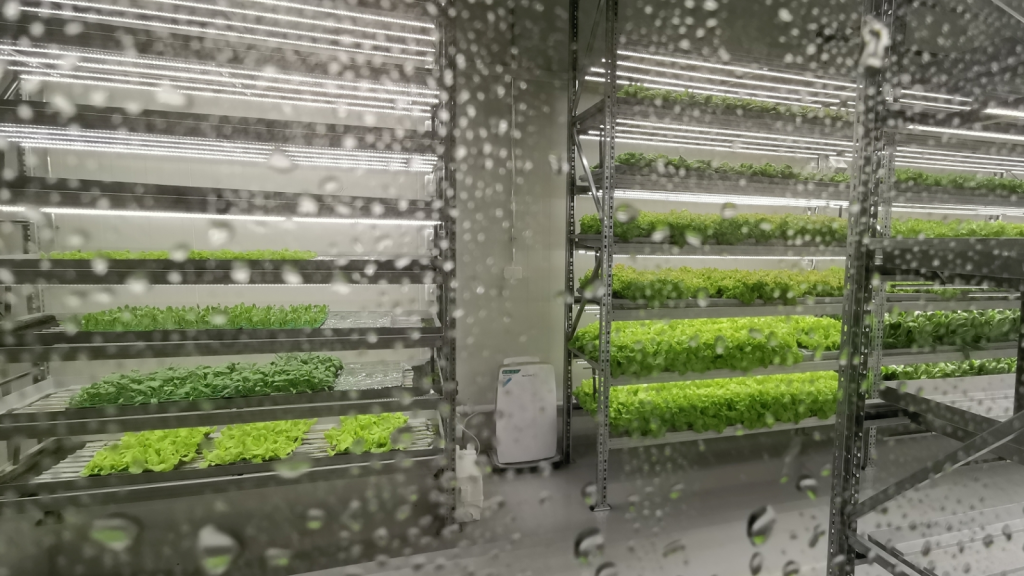
Compared to traditional agriculture, vertical farming provides several benefits, especially for farmers working in urban areas:
- You can grow more crops in smaller spaces. In fact, this type of farming uses 70-90% less land because of multilevel stacking.
- There is a higher crop yield per acre with year-round production. This is because there’s less risk of dealing with outdoor environmental factors caused by climate change.
- As a grower, you can reduce the use of pesticides when growing crops indoors in a vertical setup. With controlled indoor environments, there is a low risk of pest infestations.
- Food can be grown close to cities and, in turn, lowers carbon emissions and reduces food miles.
- Since you’re growing food in a controlled environment, it minimizes crop contamination.
- You can grow seasonal food year-round, so there’s no need for long-distance shipping.
With the proper indoor farming methods, growers can experience all these benefits and save water in the process. With vertical farming, you can reduce water consumption by up to 98%. With hydroponics and aeroponic systems, crops can thrive with minimal water usage.
How is Water Saved in Vertical Farming?
In hydroponic vertical farming setups, growers use a closed-loop recycling system for precision delivery. Water that’s not used by the crop’s roots is recaptured and then reused. The method reduces water waste and loss because, with precise delivery, crops receive only what they need.
Additionally, with indoor farming practices, there is minimal evaporation because of the absence of exposed soil. This means you’ll experience no runoff, so you can conserve most of the initial water input. Conserving water is important in areas that experience shortages. Places in the Middle East, Africa, and parts of the USA that experience droughts can benefit from water conservation methods like these in agriculture.
What Are The Problems With Vertical Farming?
Although there are many benefits to vertical farming, like water efficiency and higher crop yields, there are also common challenges that growers may face. In this next section, we discuss some of the disadvantages of vertical indoor farming and how to mitigate these issues.
Vertical Farms Can Have Higher Power Consumption
Growing crops indoors requires electricity because you need to power pumps, LED lighting, and air cons. As a result, electricity costs can become high. Traditional greenhouses use an average 5.4 kWh per kg of produce. The average energy use of a vertical farm, on the other hand is 38.8 kWh per kg of produce.
Depends on High Volumes of Water and Power
Although growing crops vertically indoors uses less water than traditional methods, there’s still the issue of water scarcity in some areas. Furthermore, power outages can also have dire consequences on vertical farms. Growers can lose entire yields if there is not enough water or power to manage their indoor growing environments.
Problems with Algae, Biofilm Buildup, and Fungal Diseases
Another issue growers face is the problem with algae, biofilms in irrigation systems, and fungal diseases. If you don’t have proper flow in your pipes and irrigation drippers, crops won’t get the right amount of hydration and nutrient delivery.
What’s more, a lack of hygiene in your vertical hydroponic system can cause algae to develop in tanks and reservoirs. Algae can create all sorts of issues, like root rot, oxygen deprivation, and nutrient deficiency. Maintaining your vertical farm can ensure a strong yield, but with the right methods and products.
Is There a Way to Mitigate Vertical Farming Problems?
To mitigate vertical farming problems, you can use sustainable agriculture farming practices such as:
- Solar power for pumps, ventilation, and lighting to reduce costs and to ensure there’s electricity when there are outages.
- Installing water tanks for when there is a shortage or if there are issues with burst pipes.
- Creating a proper maintenance schedule to ensure food security against pests and hydroponic diseases.
- Using the right eco-friendly products to improve flow in irrigation systems, like Clear Flow. This product clears biofilm buildup in pipes and reservoirs to ensure crops are getting the right amount of water at all times
- Cleaning out your tanks to prevent greenwater and plant waste using Clear Zona, which can prevent issues like fungal diseases.
The benefits of Clear Flow and Clear Zona are that they’re eco-friendly products made from water-based concentrates, so they have no harmful chemicals. If sustainable farming practices are something you value, then Clear Zona and Clear Flow are the right products to maintain your vertical hydroponic farm and help save water.
Keeping Your System Clean
If you clean your hydroponic system regularly and check your irrigation systems, your crops will get the right amount of water to thrive. Both Clear Zona and Clear Flow contribute to water conservation by keeping your tanks and irrigation systems clear of contaminants so you don’t waste precious nutrient-rich water solutions. Additionally, they are both safe to use during production, which in turn reduces downtime needed to clean or tear down a vertical farm.
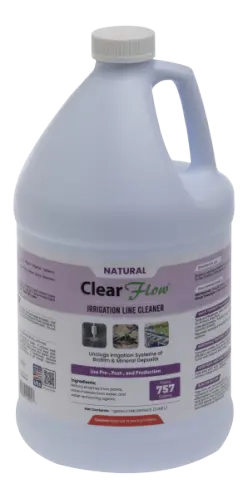
In a vertical indoor system, water management is extremely important. Using Clear Flow should be part of your irrigation maintenance schedule to clear away blockages caused by biofilm buildups so your crops are never deprived of hydration.
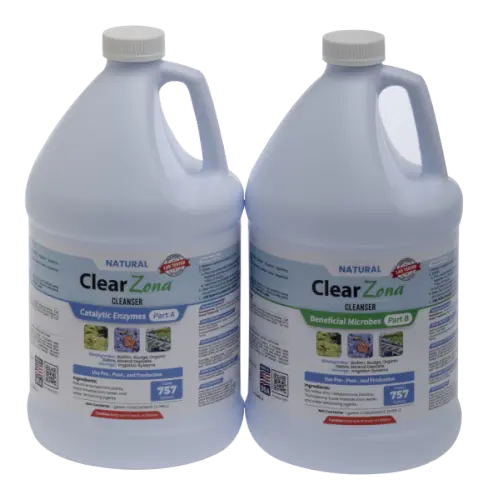
Algae buildup in reservoirs can contaminate your water resources, so you must keep your system clean. The ideal way to solve this problem is by using Clear Zona to reduce greenwater, sludge, and mineral deposits. If you keep your systems clean, you can minimize water wastage.